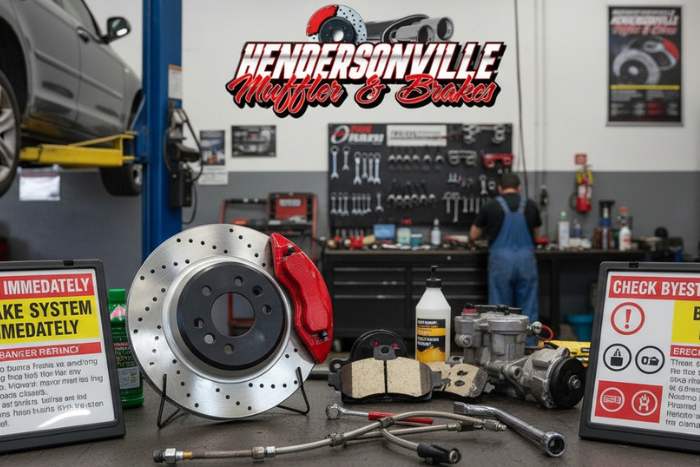
Your vehicle’s brake system is the most critical safety feature protecting you and your family on Middle Tennessee roads. Recognizing the warning signs of brake problems before they become dangerous can prevent accidents, save money on repairs, and ensure your safety while driving through Hendersonville and surrounding areas. As experienced auto mechanics serving the Hendersonville community, we see too many drivers ignore early warning signs until their brakes fail completely, creating dangerous situations that could have been easily prevented.
Strange Noises That Signal Brake Trouble
One of the most obvious indicators of brake repair needs is unusual sounds when you apply the brakes.
Squealing brakes often indicate worn brake pads, with the built-in wear indicators designed to create noise when replacement is necessary. This high-pitched squealing sound serves as an early warning system, alerting you to schedule brake service before more expensive damage occurs.
Grinding noises represent a more serious problem, typically indicating that brake pads have worn completely through and metal components are now grinding against each other. This metal-on-metal contact can quickly damage rotors, calipers, and other expensive brake components. If you hear grinding sounds from your brakes, stop driving immediately and contact a professional brake specialist for emergency service.
Clicking, rattling, or clunking sounds when braking may indicate loose brake components, worn hardware, or problems with brake calipers. These sounds often occur when brake pads shift within their mounting brackets or when caliper pins become worn or damaged. While these noises may not indicate immediate danger, they require professional inspection to prevent more serious problems.
Physical Sensations That Indicate Brake Issues
Your brake pedal provides valuable information about your brake system’s condition. A spongy brake pedal that feels soft or goes too far toward the floor often indicates air in the brake lines, brake fluid leaks, or worn brake components. This condition reduces braking effectiveness and requires immediate professional attention.
Brake pedal pulsation or vibration when braking typically indicates warped rotors, which can occur from excessive heat buildup during heavy braking or from normal wear over time. Warped rotors prevent even contact between brake pads and rotors, reducing stopping power and creating an uncomfortable driving experience.
If your brake pedal feels hard and requires excessive force to stop the vehicle, you may have problems with the brake booster, master cylinder, or brake fluid system. This condition makes it difficult to stop quickly in emergency situations and requires immediate professional diagnosis.
Visual Warning Signs of Brake Problems
Regular visual inspections can help identify brake maintenance needs before they become serious problems. Look through your wheel spokes to examine brake components for obvious signs of wear or damage. Brake pads should have at least 1/4 inch of friction material remaining – if you can see less material or notice deep grooves in the pads, replacement is necessary.
Brake fluid leaks appear as dark, oily spots under your vehicle where you park. Brake fluid is typically clear to amber colored when new but darkens with age and contamination. Any brake fluid leaks require immediate attention, as brake systems cannot function properly without adequate fluid pressure.
Rust, corrosion, or scoring on brake rotors indicates potential problems that may require rotor resurfacing or replacement. While surface rust is normal after sitting in wet conditions, deep scoring or excessive corrosion can affect braking performance and safety.
Dashboard Warning Lights and Indicators
Modern vehicles include sophisticated warning systems designed to alert drivers to brake problems before they become dangerous. The brake warning light on your dashboard indicates low brake fluid, parking brake engagement, or problems with the brake system’s electronic components. Never ignore this warning light, as it indicates conditions that could lead to brake failure.
ABS warning lights indicate problems with the anti-lock brake system, which helps prevent wheel lockup during emergency braking. While your regular brakes may still function with ABS problems, you lose the safety benefits of anti-lock braking in emergency situations.
Performance Changes That Signal Brake Problems
Changes in how your vehicle stops or handles during braking often indicate developing brake problems. If your car pulls to one side when braking, you may have uneven brake pad wear, brake fluid leaks, or problems with brake calipers on one side of the vehicle. This condition affects your ability to control the vehicle during braking and requires professional diagnosis.
Longer stopping distances or reduced braking effectiveness indicate worn brake components that need immediate attention. If you notice that your vehicle takes longer to stop or requires more pedal pressure than usual, schedule brake inspection immediately.
The Importance of Professional Brake Inspection
While some brake warning signs are obvious to drivers, many brake problems develop gradually and may not be immediately apparent. Professional brake inspection includes checking brake pad thickness, rotor condition, brake fluid levels and quality, brake lines and hoses, calipers, and all related hardware. Experienced technicians can identify developing problems before they become dangerous or expensive.
Preventing Brake Problems Through Regular Maintenance
Regular brake maintenance helps prevent many common brake problems and extends the life of brake components. This includes periodic brake fluid changes, brake inspections, and addressing minor issues before they become major problems. Following manufacturer-recommended maintenance schedules helps ensure optimal brake performance and safety.
When to Seek Professional Help
Don’t wait for complete brake failure to seek professional help. Any unusual noises, sensations, or performance changes related to your brakes warrant immediate professional inspection. Auto repair professionals have the tools, knowledge, and experience to accurately diagnose brake problems and recommend appropriate solutions.
Your safety and the safety of other drivers depends on properly functioning brakes. If you notice any warning signs discussed in this article, contact a trusted brake repair specialist immediately for professional inspection and service.
For years, Hendersonville Muffler and Brakes has been providing expert automotive repair services to families throughout Middle Tennessee. Owner Justin Hunter and his experienced team specialize in brake repair, exhaust system service, and comprehensive auto maintenance for all makes and models.
Contact Hendersonville Muffler and Brakes Today:
Brake Problems? Don’t Wait! – Call today to schedule your brake inspection and ensure your family’s safety on the road!